On a winter morning, Diane warmed herself in the steam of her shower. Sliding her fingers over her right breast, she met the resistance of what felt like three raw peas. She froze. Fumbling for the soap, she rolled the bar in her hands and slid her fingers over the area again, desperate to deny what she felt.

A radiologist diagnosed the shadows on her mammogram as lymph nodes. She sought a second opinion. The cancer in her breast was among the most virulent her oncologist had encountered. Diane underwent a mastectomy and six months of chemotherapy.

The aggressive nature of the cancer and a twenty percent chance of reoccurrence in her left breast convinced her to undergo a prophylactic mastectomy. Though the removal of a healthy breast is a controversial measure, she sought any preemptive strike against the cancer's return.

Confronted with life-altering decisions in the days following her initial diagnosis, she desperately sought a sense of what lay ahead. What she found were clinical images of faceless torsos, conflicting advice, and life-affirming bromides she distrusted. She allowed me to document her experience to provide others with the signposts she herself sought but could not find.  Sharing her story provided both of us with a means of focusing feelings of helplessness and frustration into something concrete, a means of fighting back against an enemy we could not see.

Diane's Story was a Finalist for the Pulitzer Prize
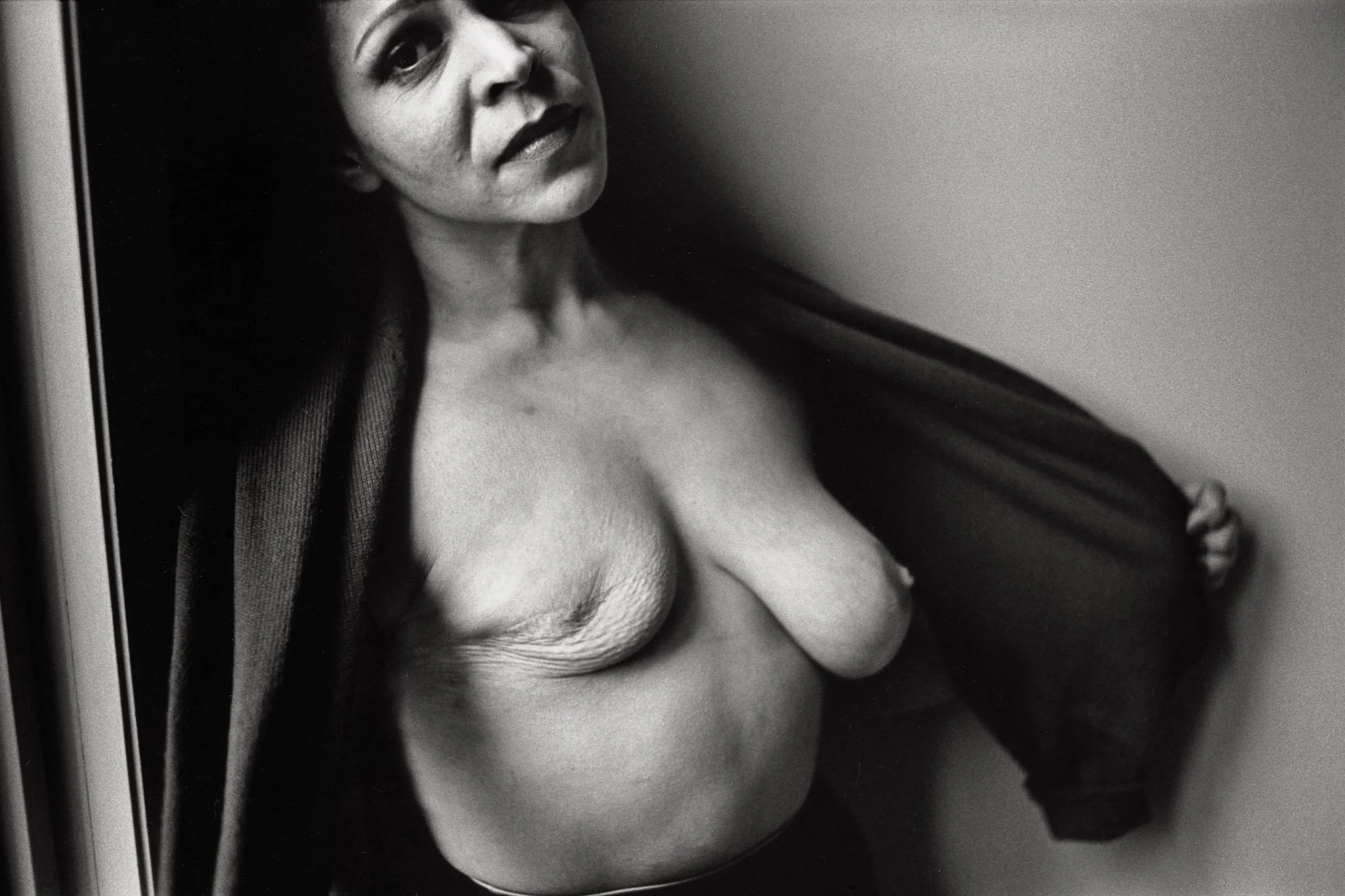
A woman with a mastectomy open her shirt to reveal herself, physically but also emotionally.
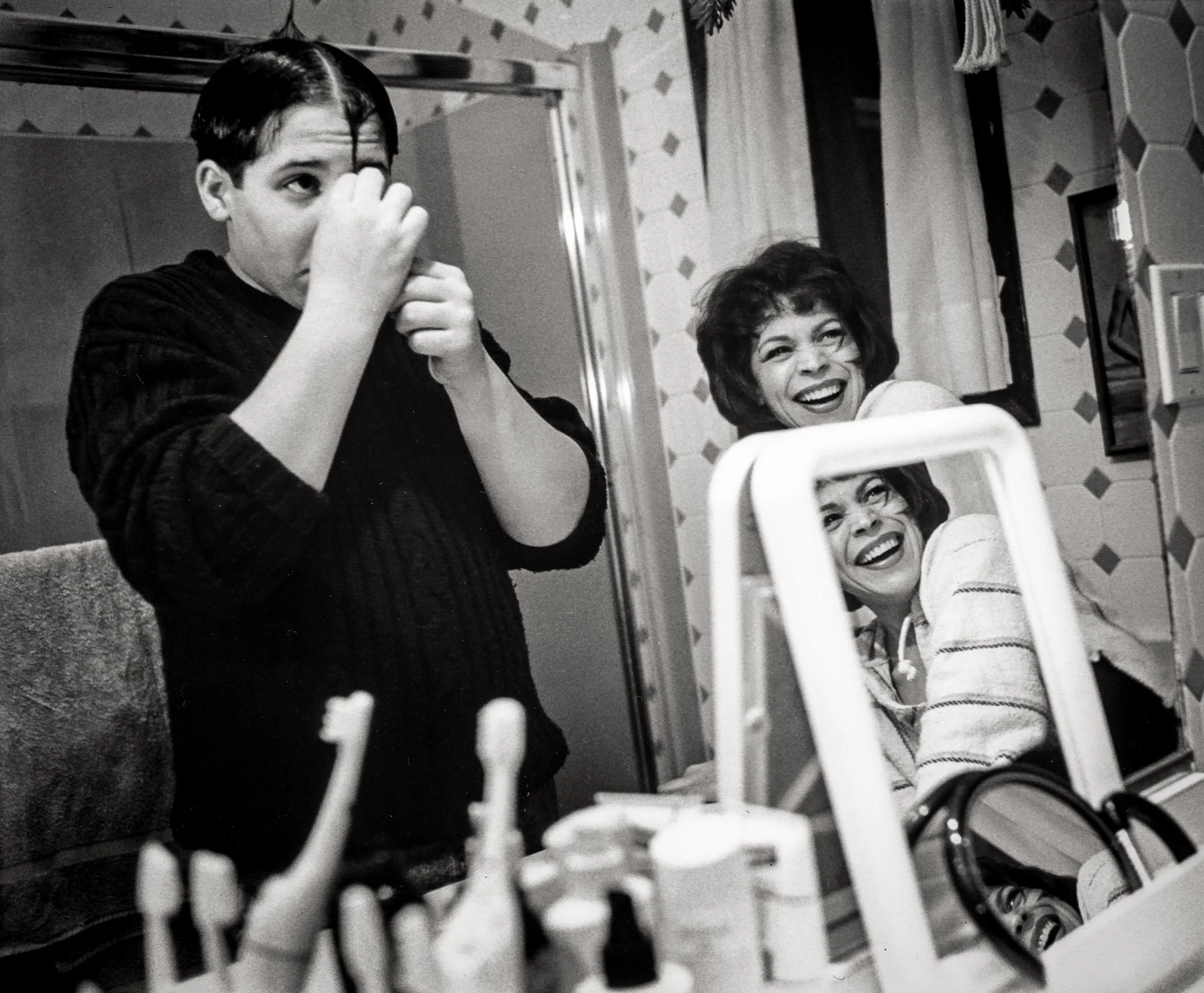
A teenage boy plays with his hair in a silly fashion while his mother watches, reflected in multiple mirrors.

A single mother, Diane sought to protect her sons by shielding them from the effects of her treatment, at a price of losing the understanding she needed. Still, each helped in the way he knew. Her son bolstered her spirits with his antics.
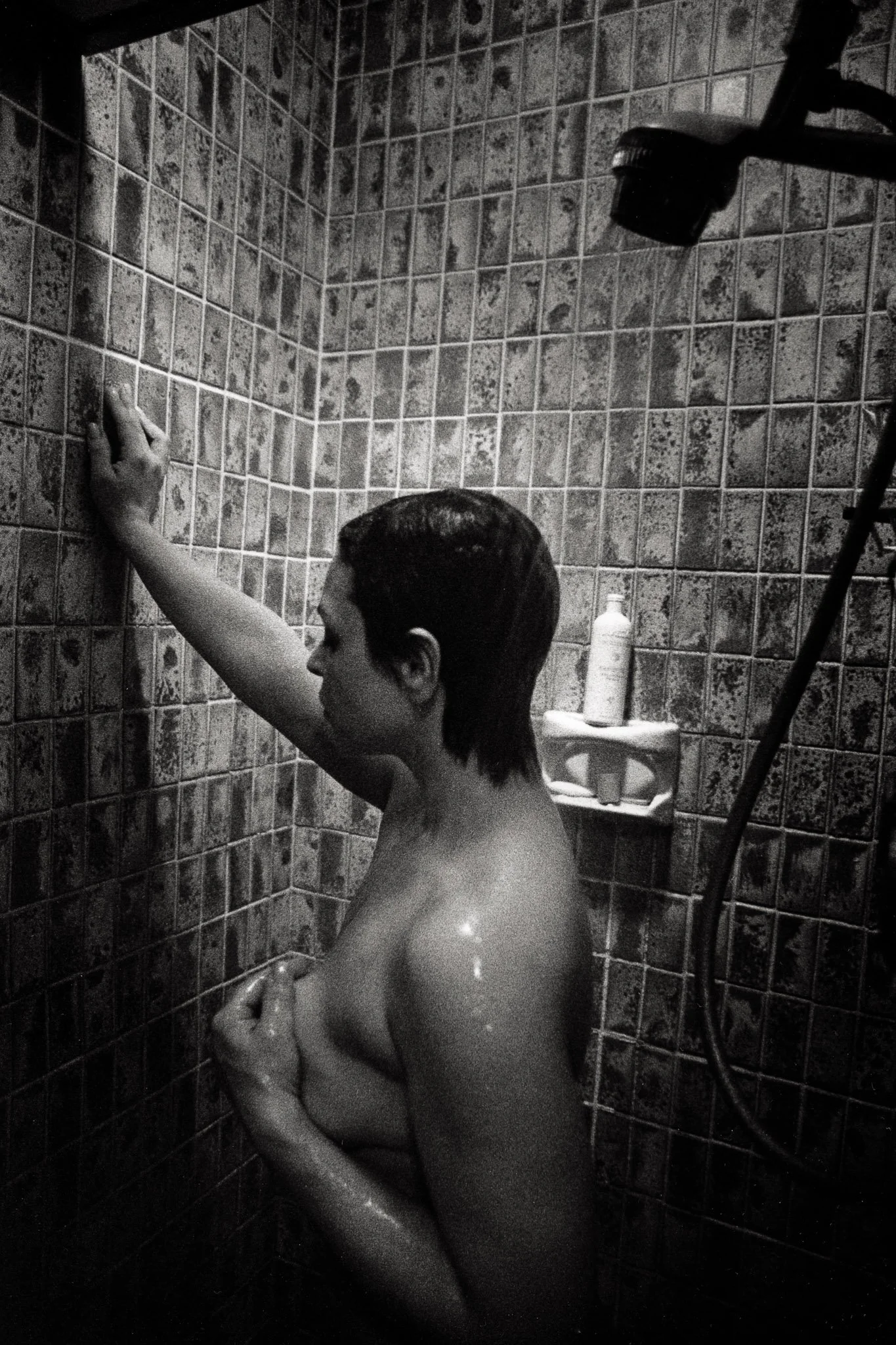
A woman in a dark shower at 4:30 a.m. clutches her breast for the last time on the morning of her  mastectomy.

4:30 a.m. Morning of second mastectomy.
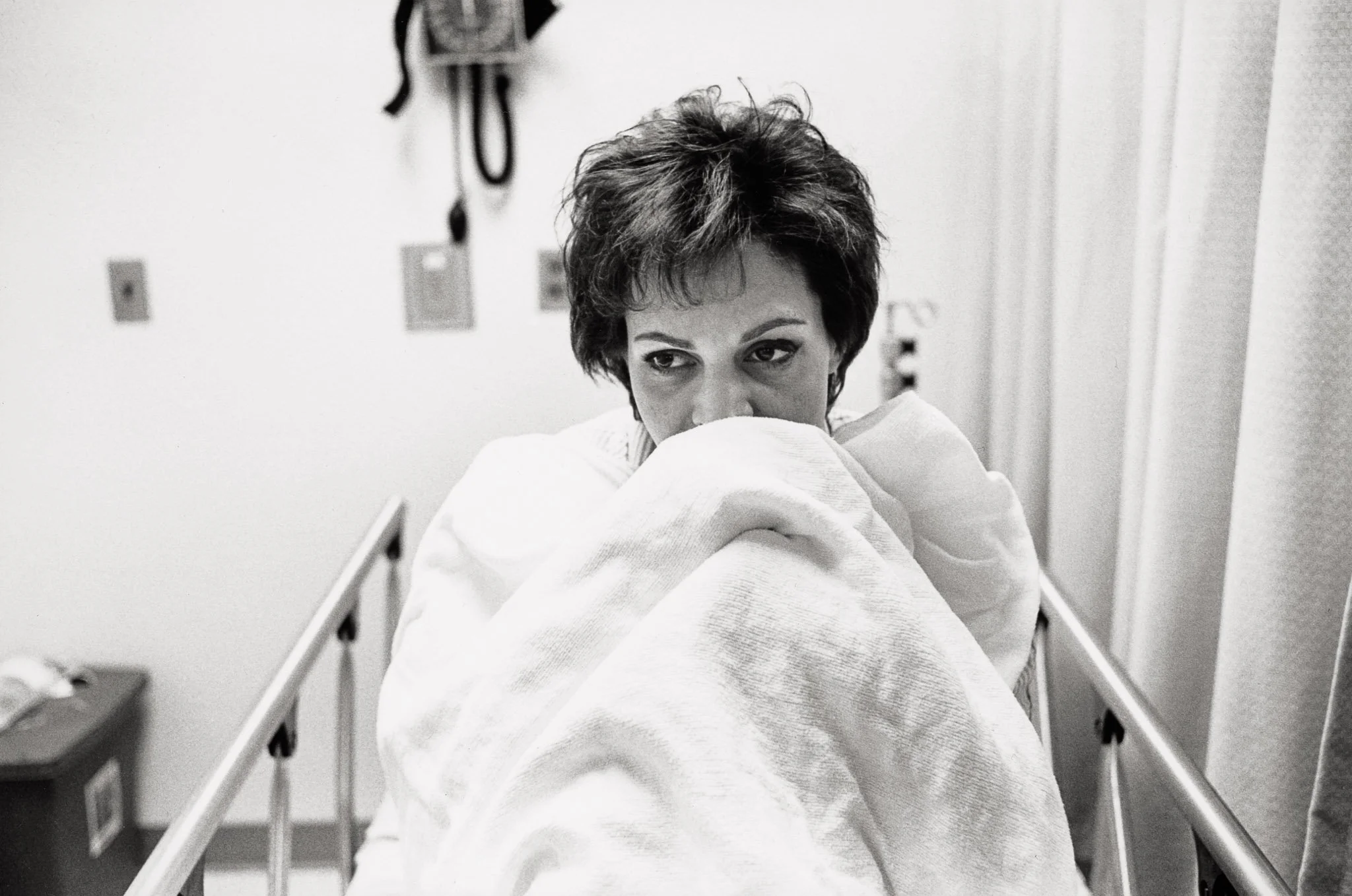
A woman in a  surgical preparation room huddles under her blanket, with nervous trepidation before her mastectomy.
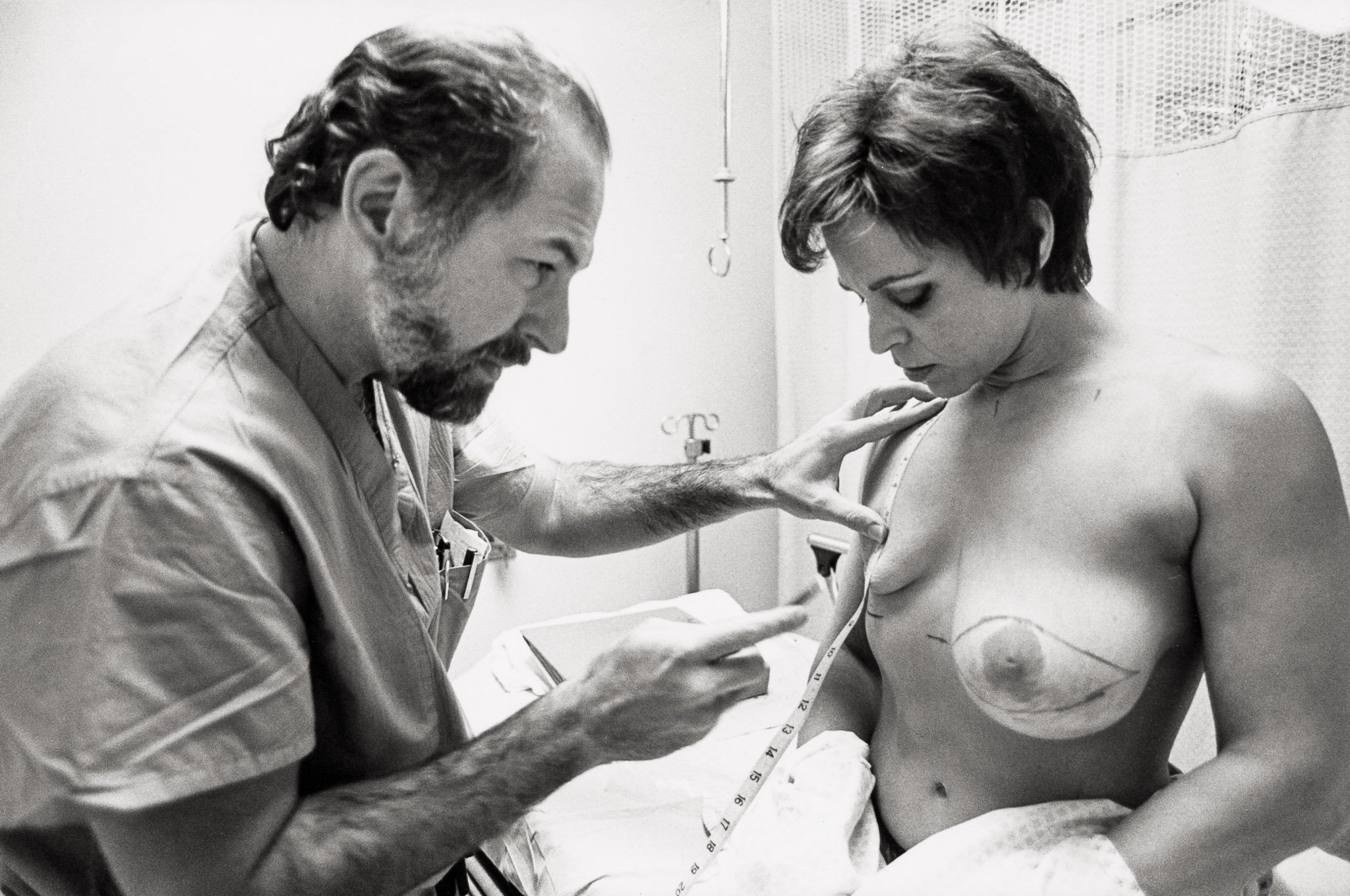
A plastic surgeon makes final measurements in a pre-operation ward prior to a woman's mastectomy, drawing incision lines on her chest.
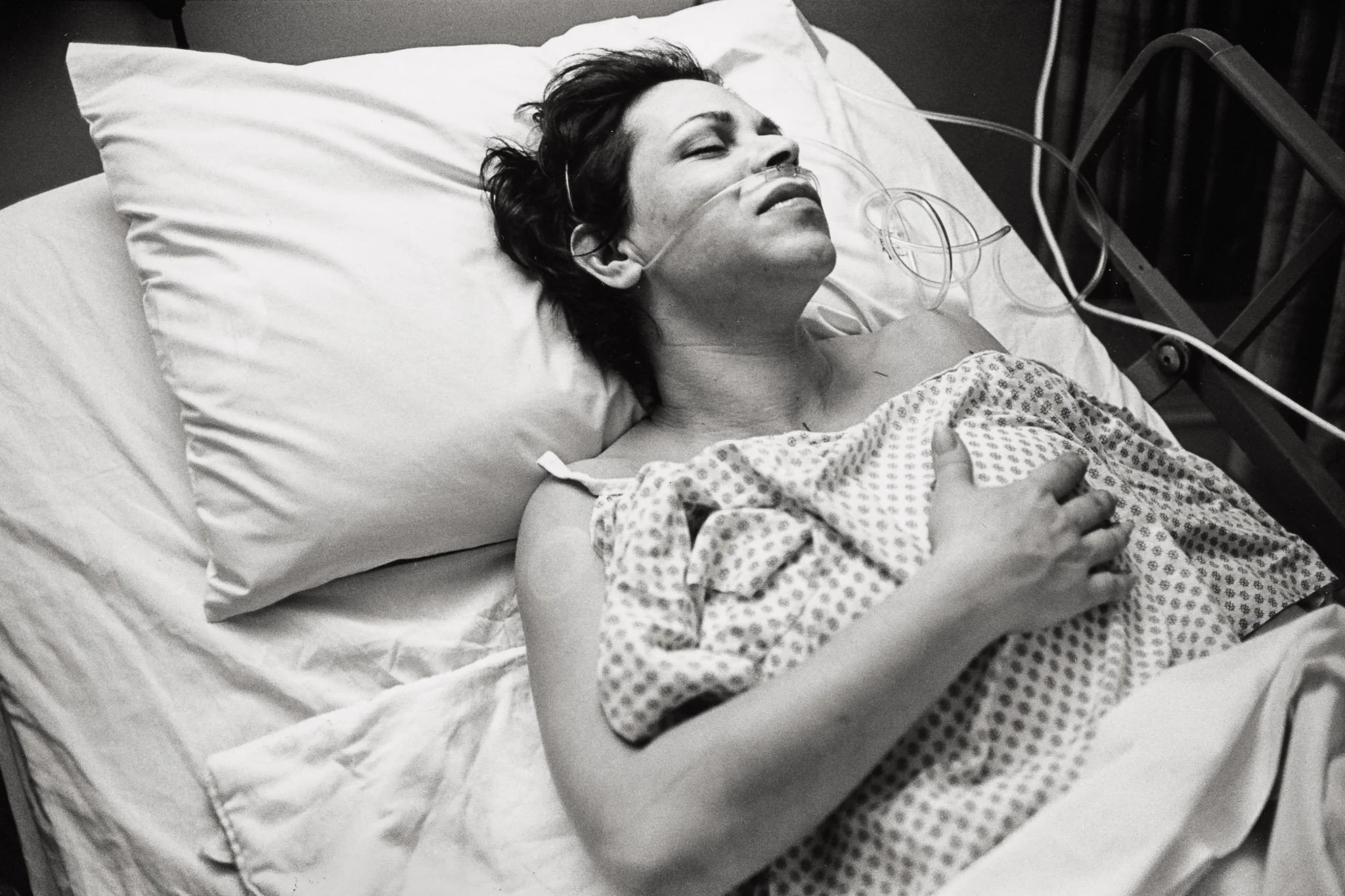
A woman lies in a hospital bed following a mastectomy, her hand feeling the place where her breast used to be, relieved by its absence.

Still drunk with anesthesia, Diane's hand closes on the empty space that was her left breast. She is relieved by its absence.
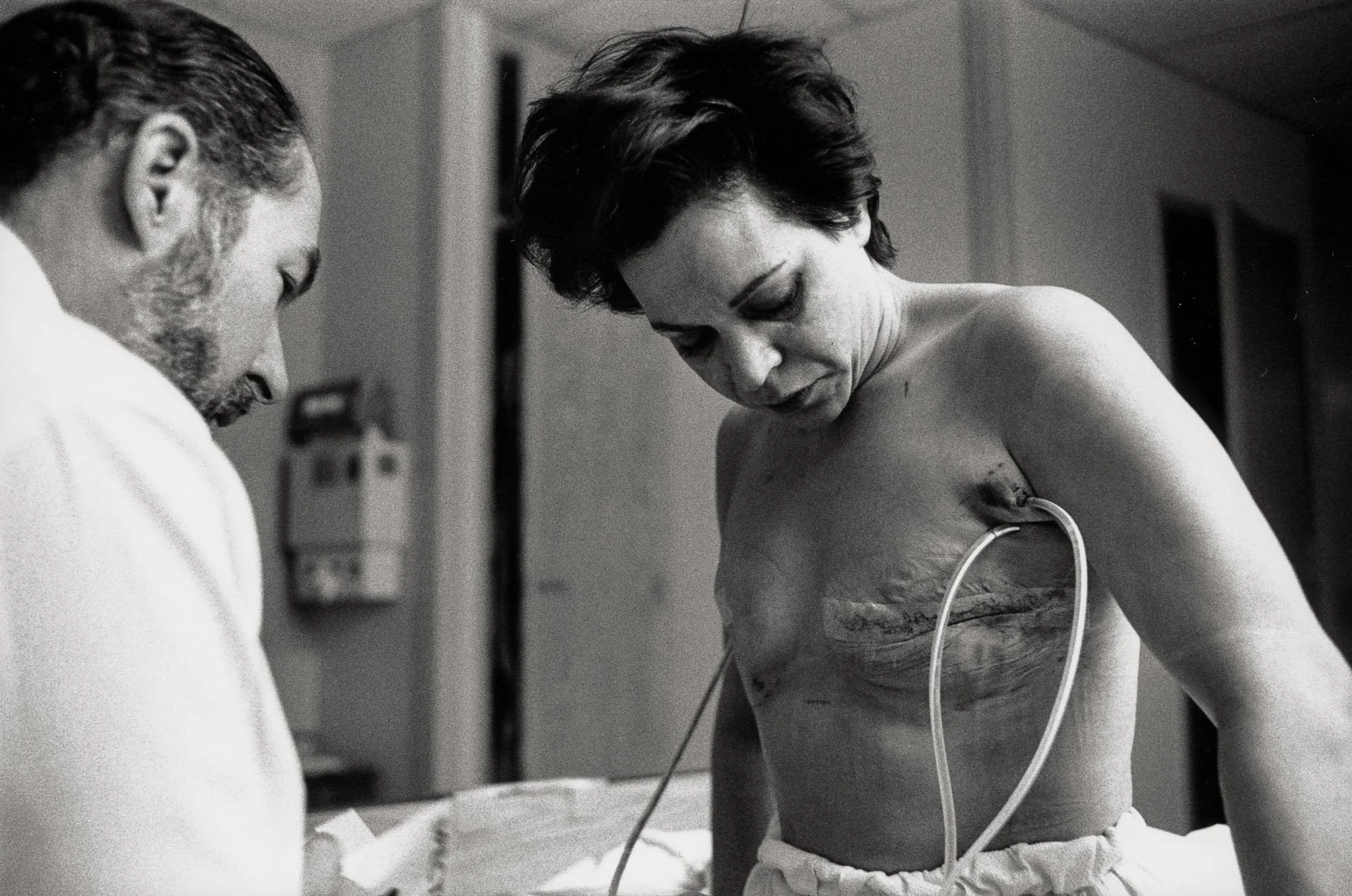
A woman sits up in her hospital bed the morning after her mastectomy, viewing the scars on her chest for the first time. She has dark circles under her eyes, her wounds are raw, drainage tubes come from her pectoral area.
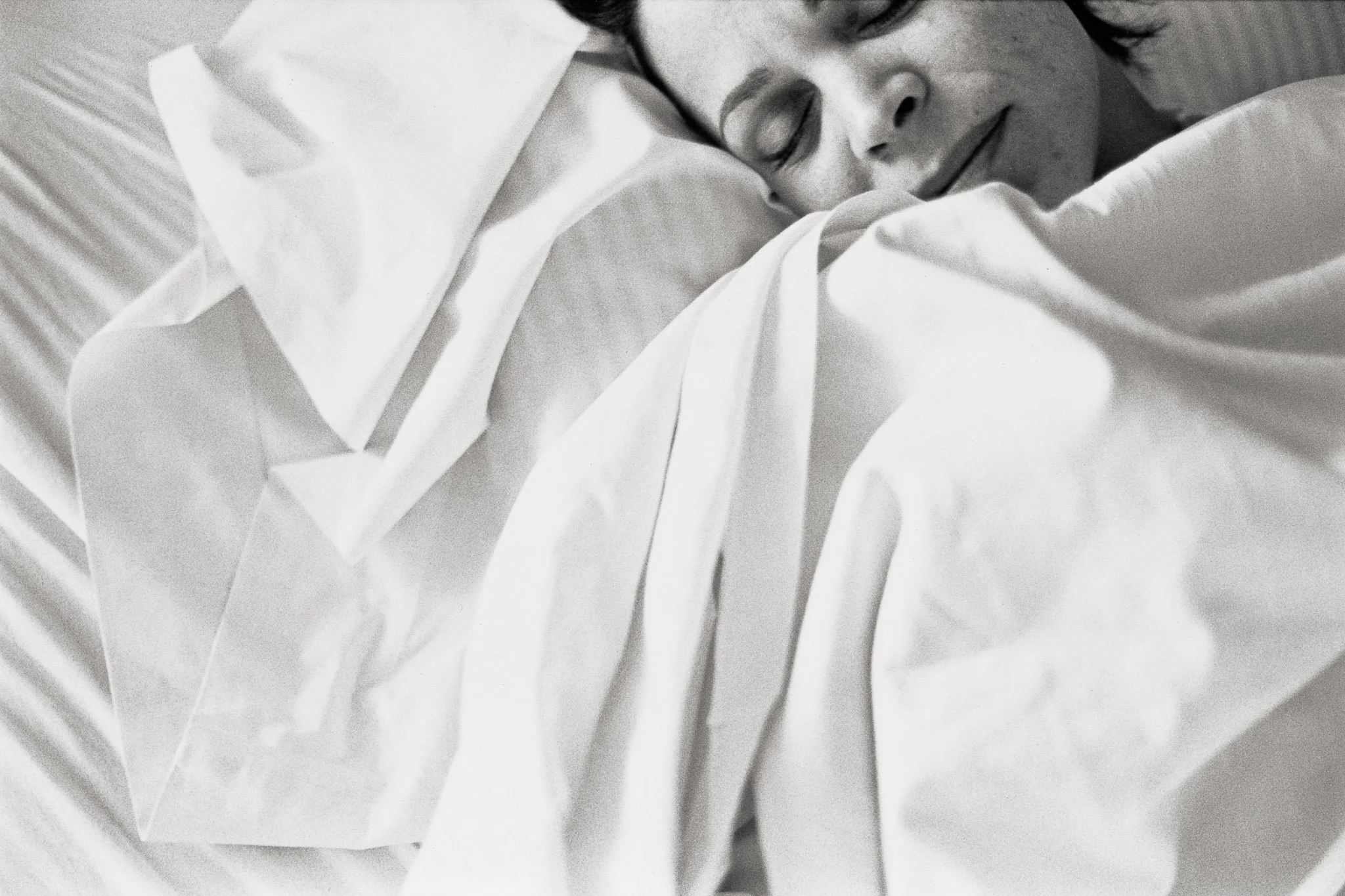
High key image of a woman sleeping in white sheets, the folds and creases almost ethereal.  Her face is just visible on edge of the frame, tightly cropped, sleeping with a serene expression. The mood is of airy transcendence.

Diane falls asleep the morning after surgery, relieved for the first time in months that the breast she came to view as an alien threat is finally gone.
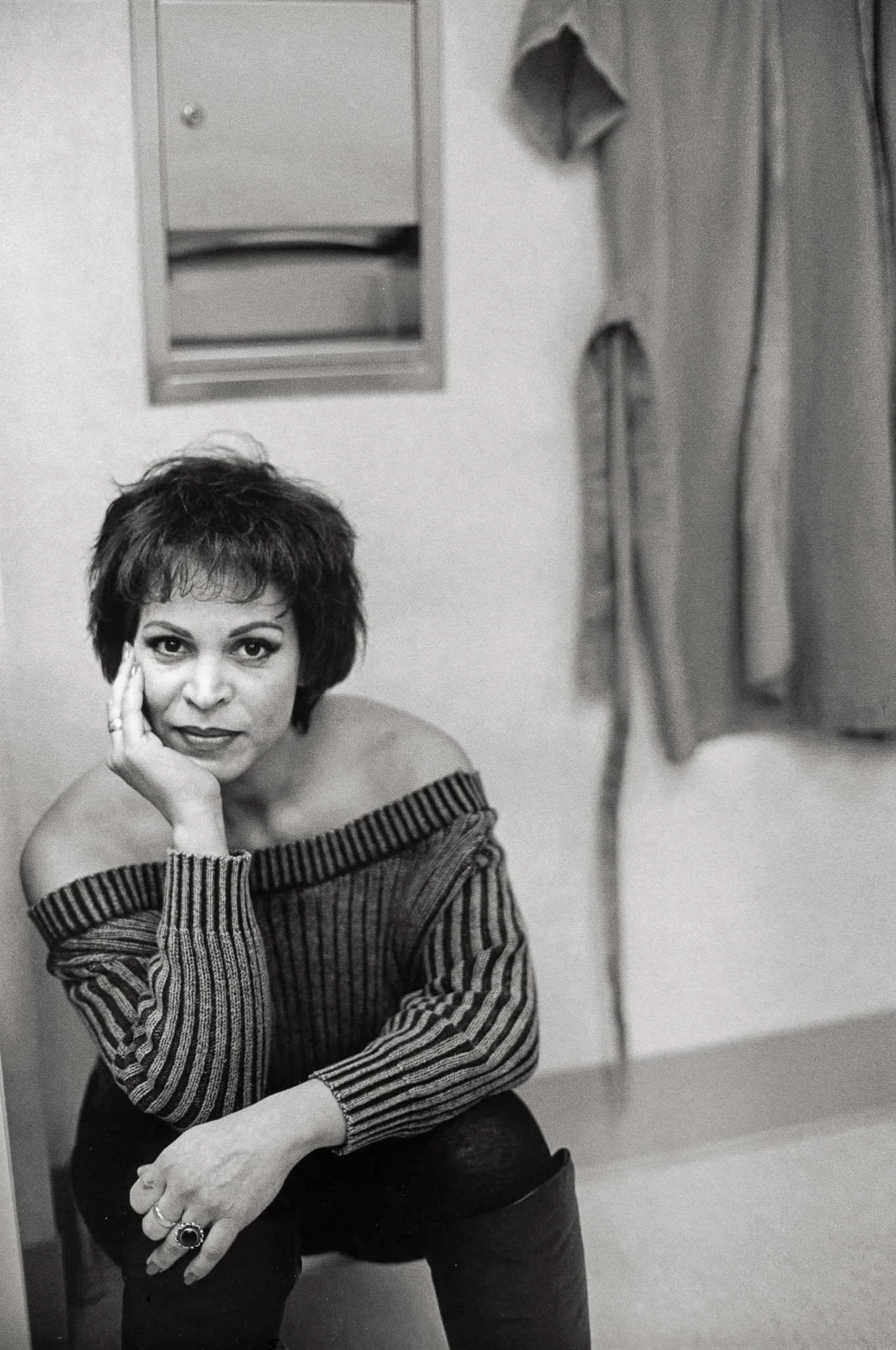
A woman sits in a plastic surgeon's office three weeks after a mastectomy, beautiful and coiffed, with a look of optimistic determination.

Plastic surgeon's office, three weeks after second mastectomy.
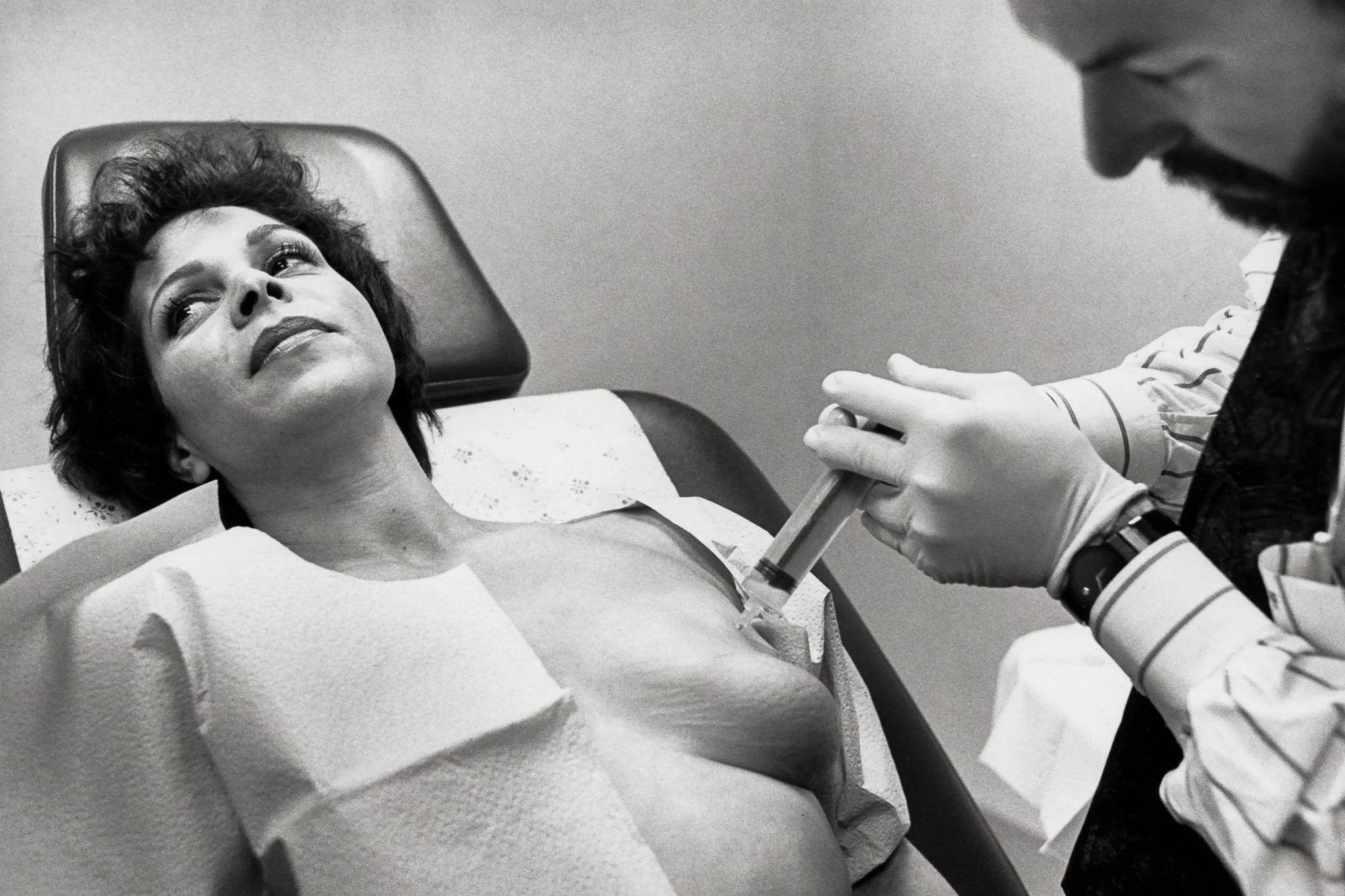
A woman leans back in a plastic surgeon's office as a large syringe filled with saline is injected into her implants for bilateral reconstruction after two mastectomies.

Expansion

A woman cups her emerging breasts in a surgeon's office, a look of joy on her face, as she begins the process  of reconstruction.
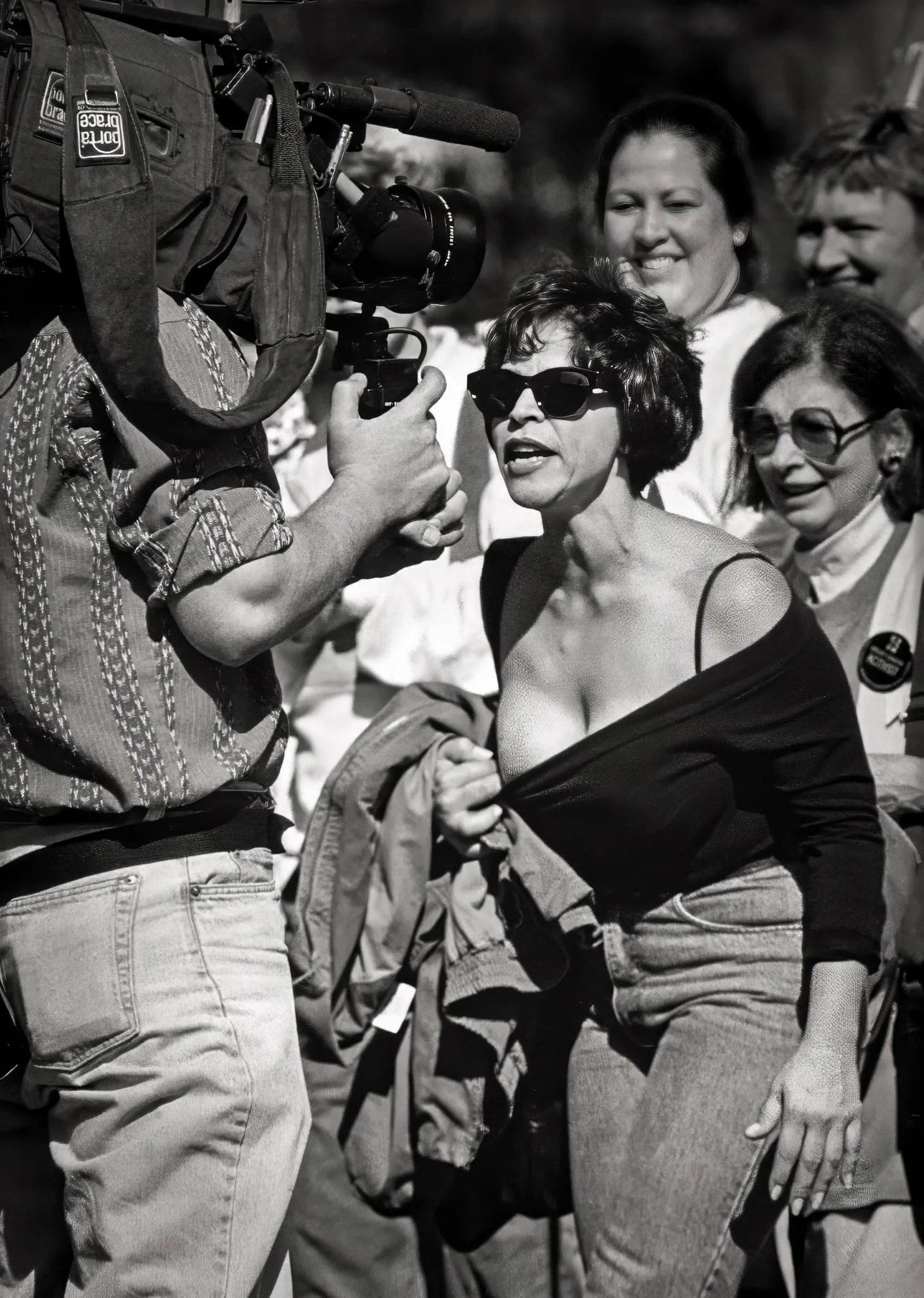
A woman at a demonstration pulls down her top in front of a television cameraman to reveal her partially reconstructed breast. She is angry, yelling at the cameraman, while the women in the background are smiling.

Diane seeks solidarity at a breast cancer march in Washington DC. Women in pink shirts are laughing, smiling, feeling the camaraderie of survivors with a shared history and purpose.She feels no connection with them. She expected tears, shouting, but sees none of the anger she feels. In frustration, she yanks her shirt down, revealing her partially reconstructed chest to a cameraman. "We don't want to see that," he says. "I know you don't want to see it," she screams, "that's why you have to see it."
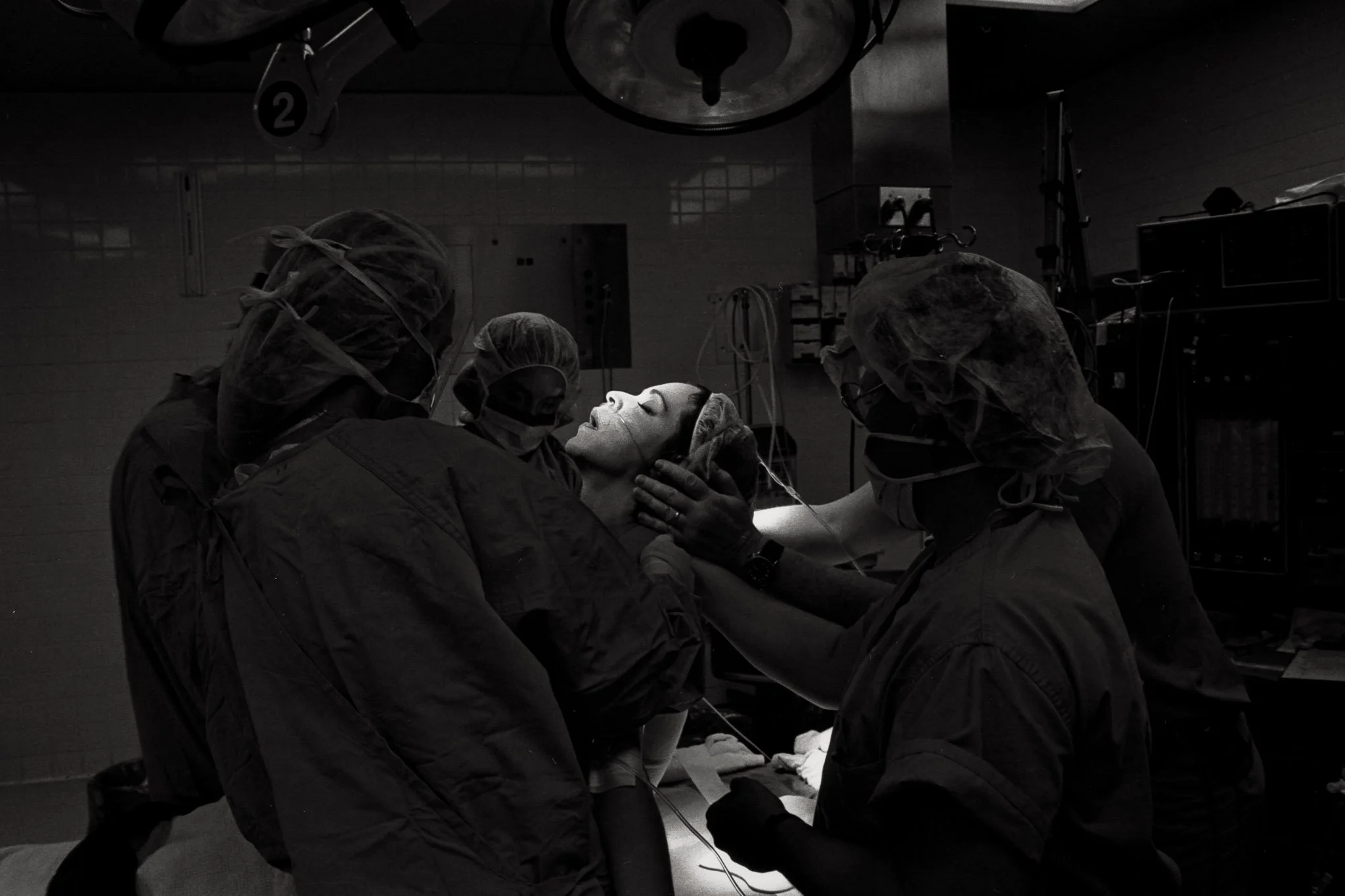
A woman's face is lifted into a tiny pool of light in an operating room, eyes closed, mouth open, while the room itself is very dark, the masked surgeons looking like passing ghosts around her, just barely visible.

Six months into reconstruction, an implant unexpectedly ruptures, effectively deflating her right breast. The saline leaking into her body poses no danger, but it is a devastating psychological setback after months of striving to feel whole.
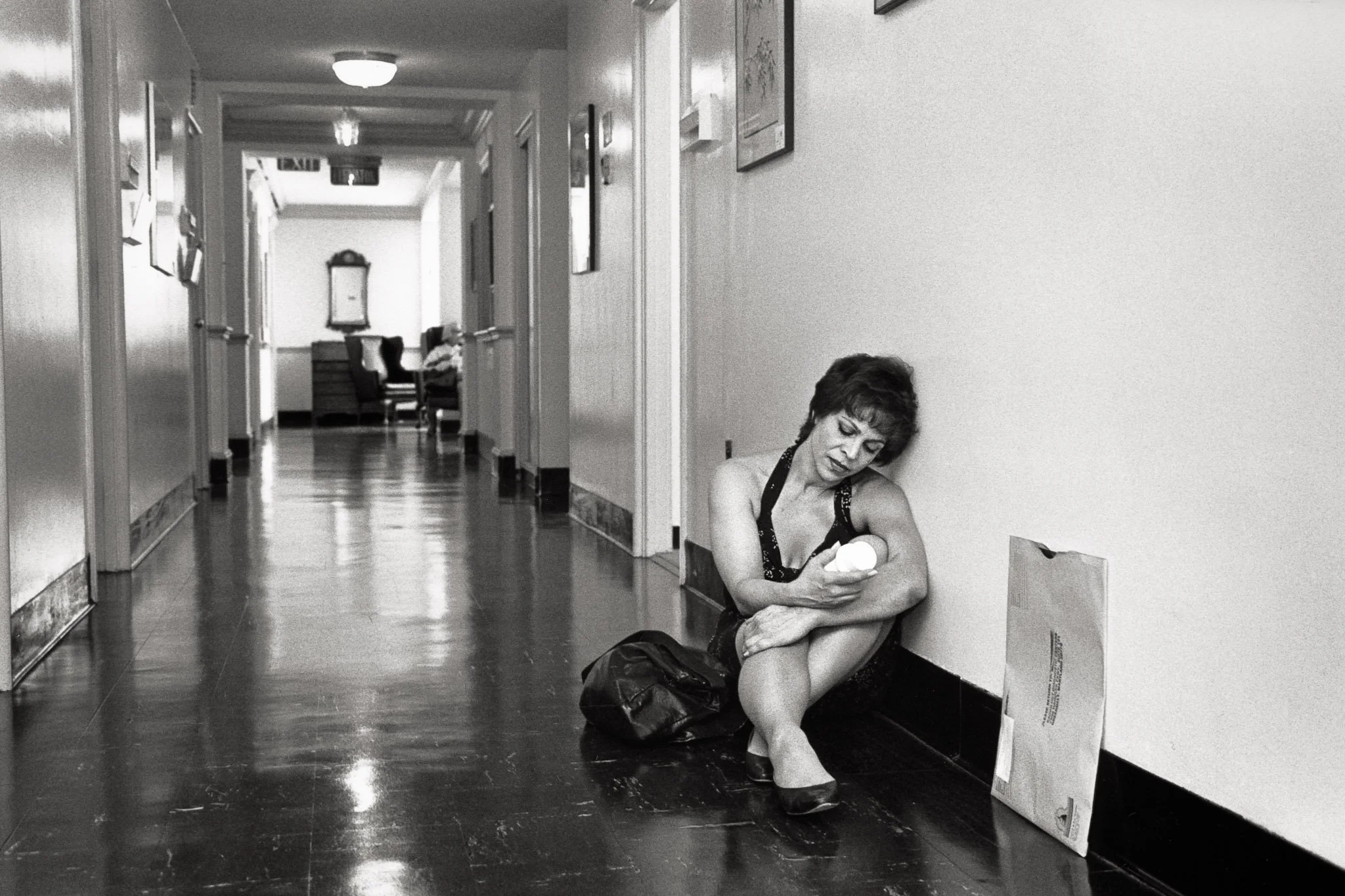
A woman in a dress sits on the floor of a medical building hallway, looking at a bottle of barium solution she must drink for a CT scan, a large folder with her medical scans next to her.

Diane waits outside her oncologist's office with her charts and bottle of liquid containing barium, awaiting a CT scan. A negative result provides momentary relief, but the continuous testing underscores the expectation that someday, somewhwere, the cancer may return.
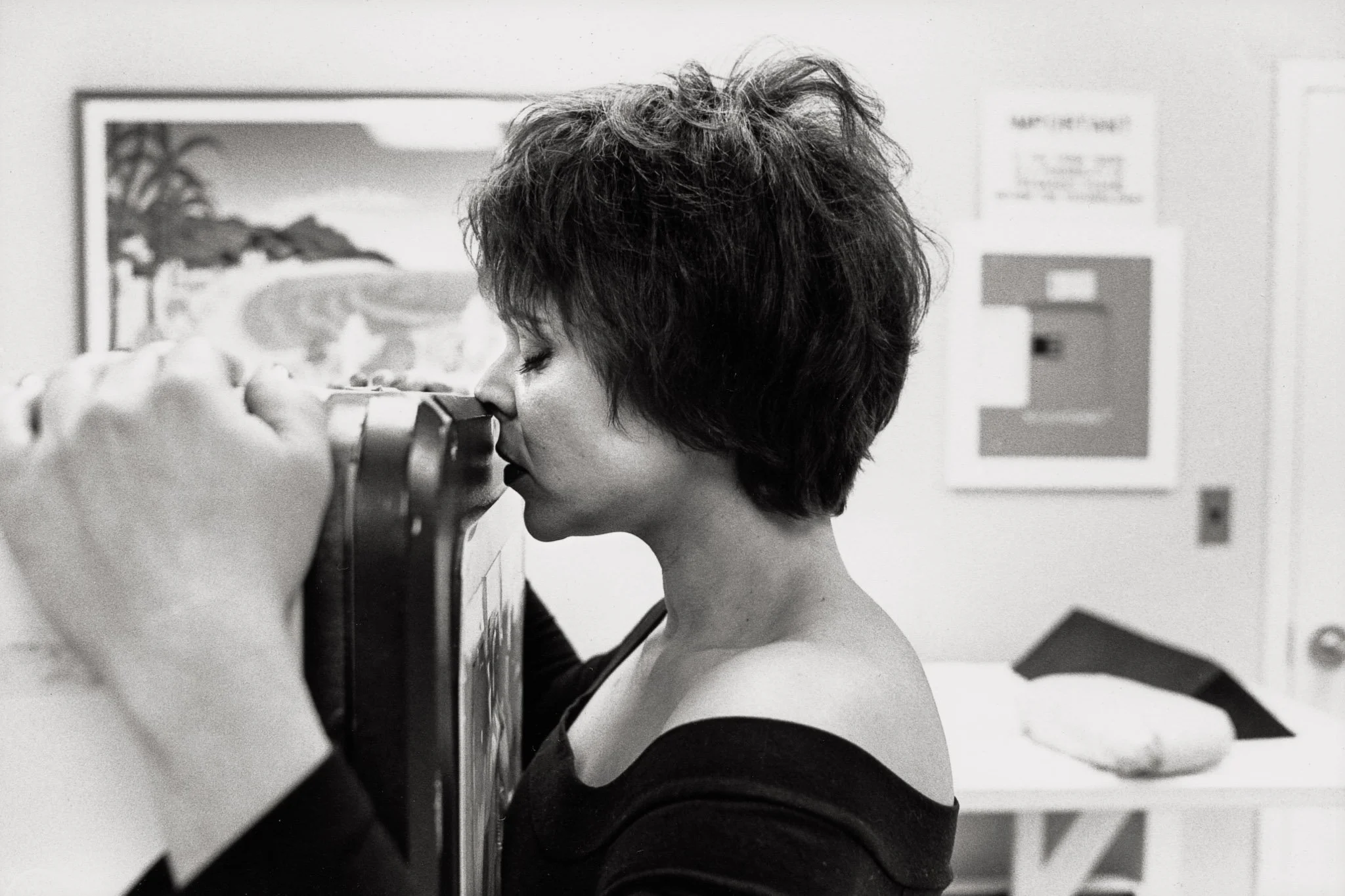
A woman in a doctor's office stands clutching a CT machine, pressing her chest against the sensor, her eyes closed in quiet concentration and prayer, hoping for negative results as the machine scans for the emergence of new cancer tumors.

Regular tests looking for hints of metastasis are a constant reminder that cancer is forever in remission, never completely gone. Injections of radioactive isotopes allow oncologists to check for suspiciously high densities of marrow, a possible sign that the cancer had metastasized. Every three months, a test. Every three months, a verdict.
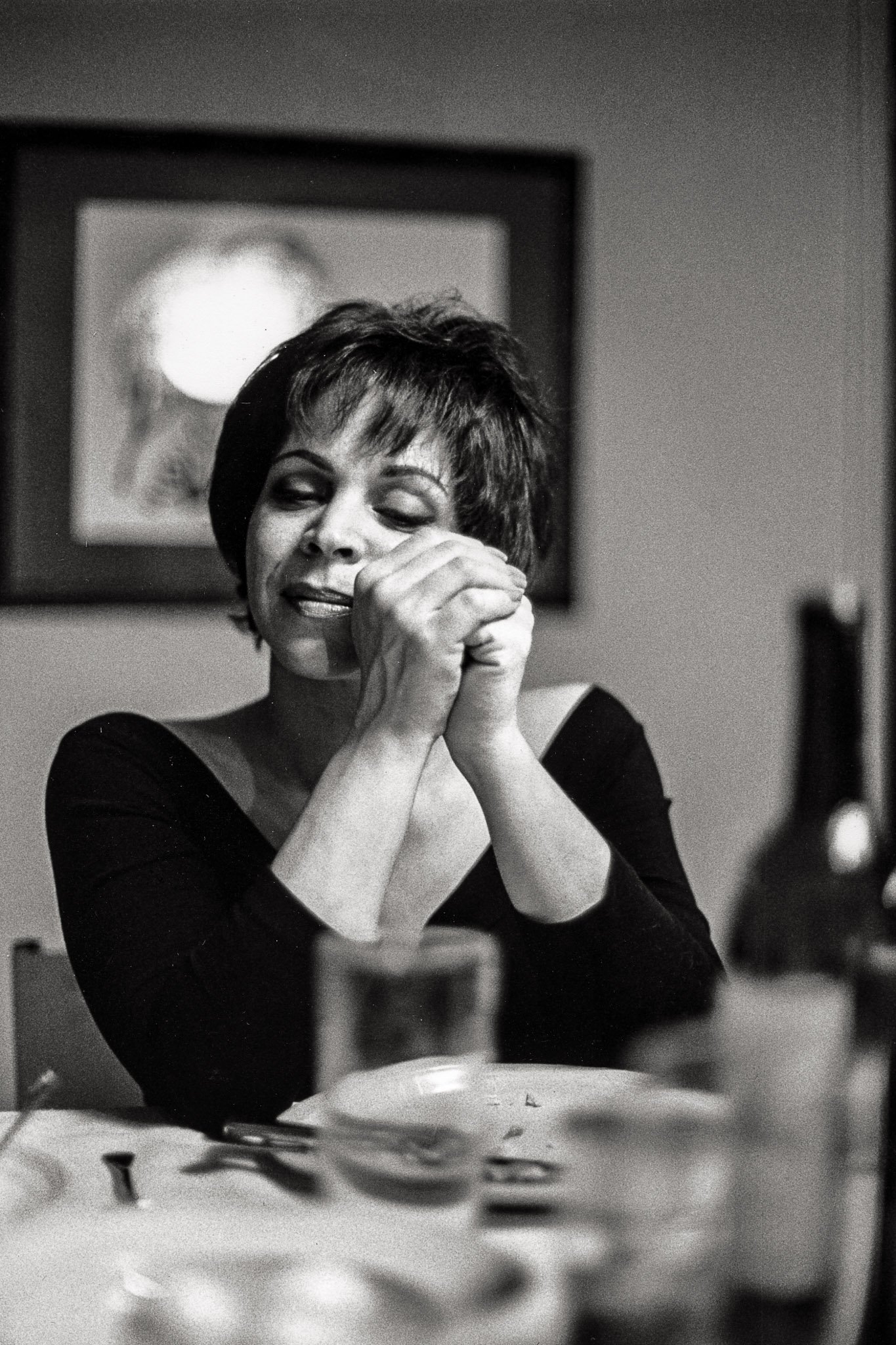
A breast cancer survivor sits at her table during Passover, hands folded in front of her face, head tilted, eyes closed, smiling.

"Passover. Last year I sat at this table and prayed the angel of death would pass over me. A year later, I sit at this table again, defiant of death, humble before God, at peace with myself."
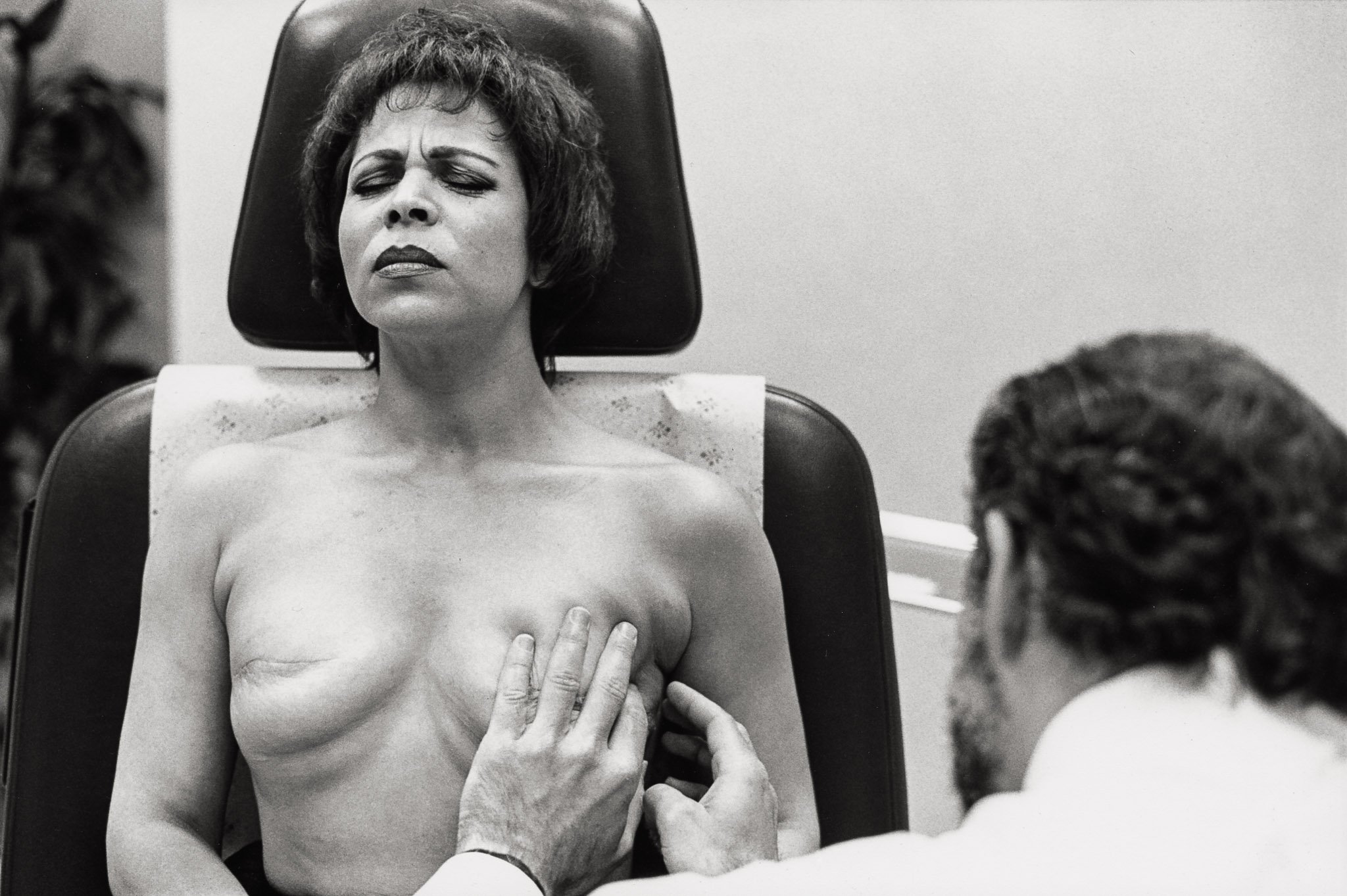
A woman with a bare chest sits against a chair in a plastic surgeon's office,  wincing as the doctor pokes at scar tissue after ruptured implants were replaced after a bilateral mastectomy. The pain is a relief, indicating her breasts are not numb.

"After being told my breasts would be numb, hope. If I can feel pain, I will most certainly be able to feel pleasure."
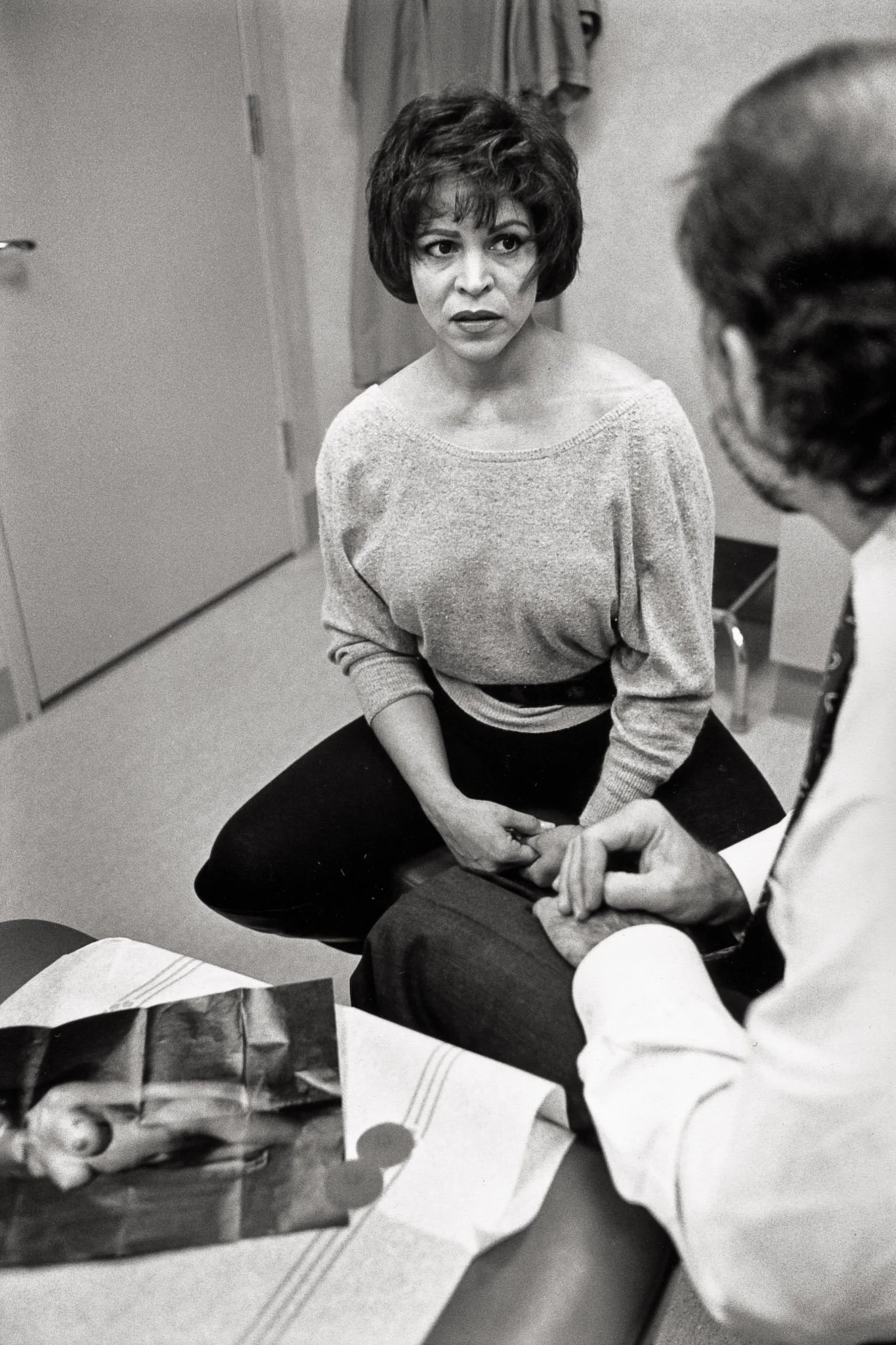
A woman consults with her plastic surgeon after a bilateral mastectomy. In the foreground is a picture of a woman with firm full breasts ripped from a magazine, along with two prosthetic nipples. He explains the limits to what he can do.

As she nears the end of reconstruction, Diane brings her surgeon an image of how she would like her finished breasts to appear. He explains what he can and cannot do.
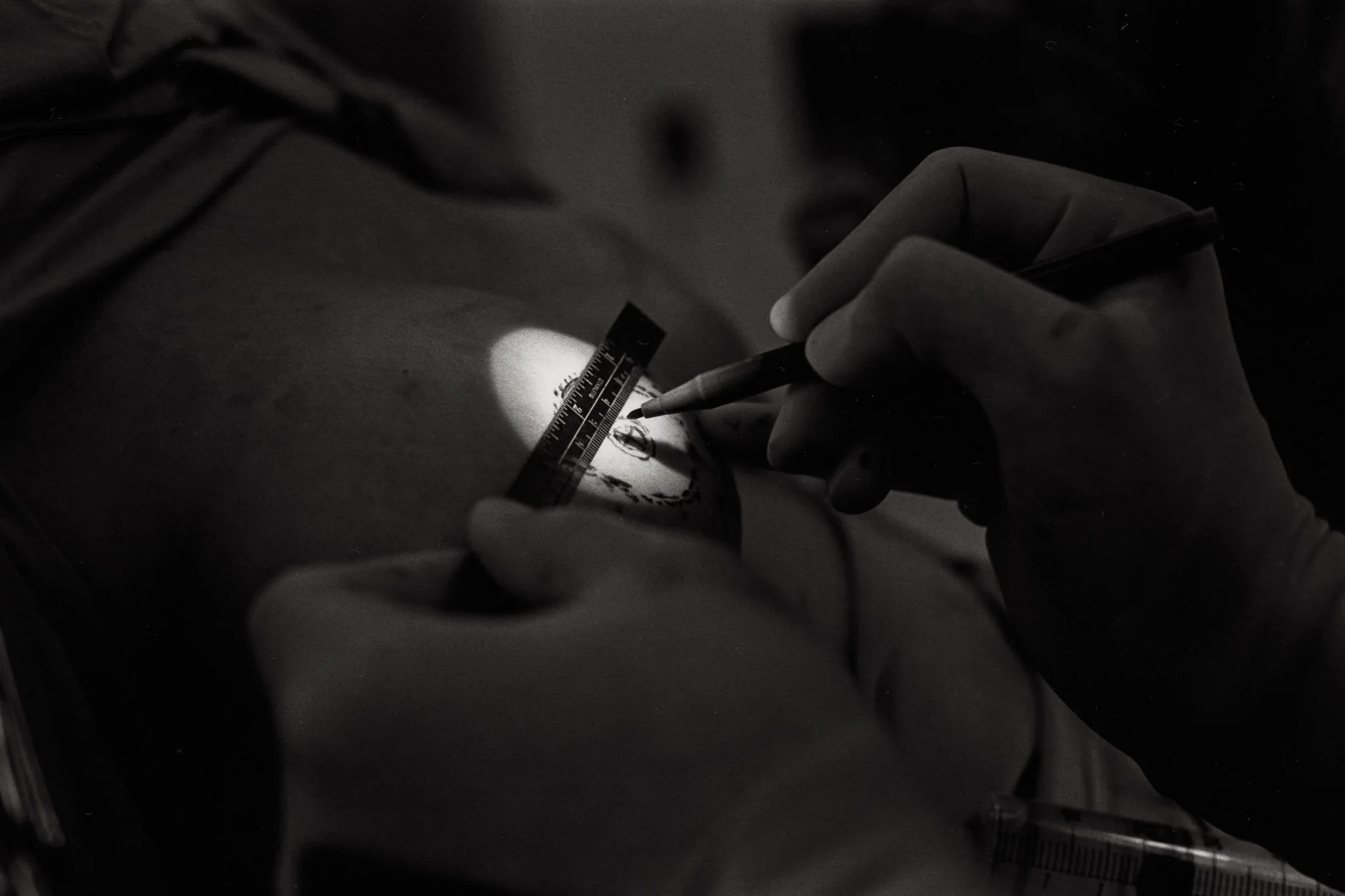
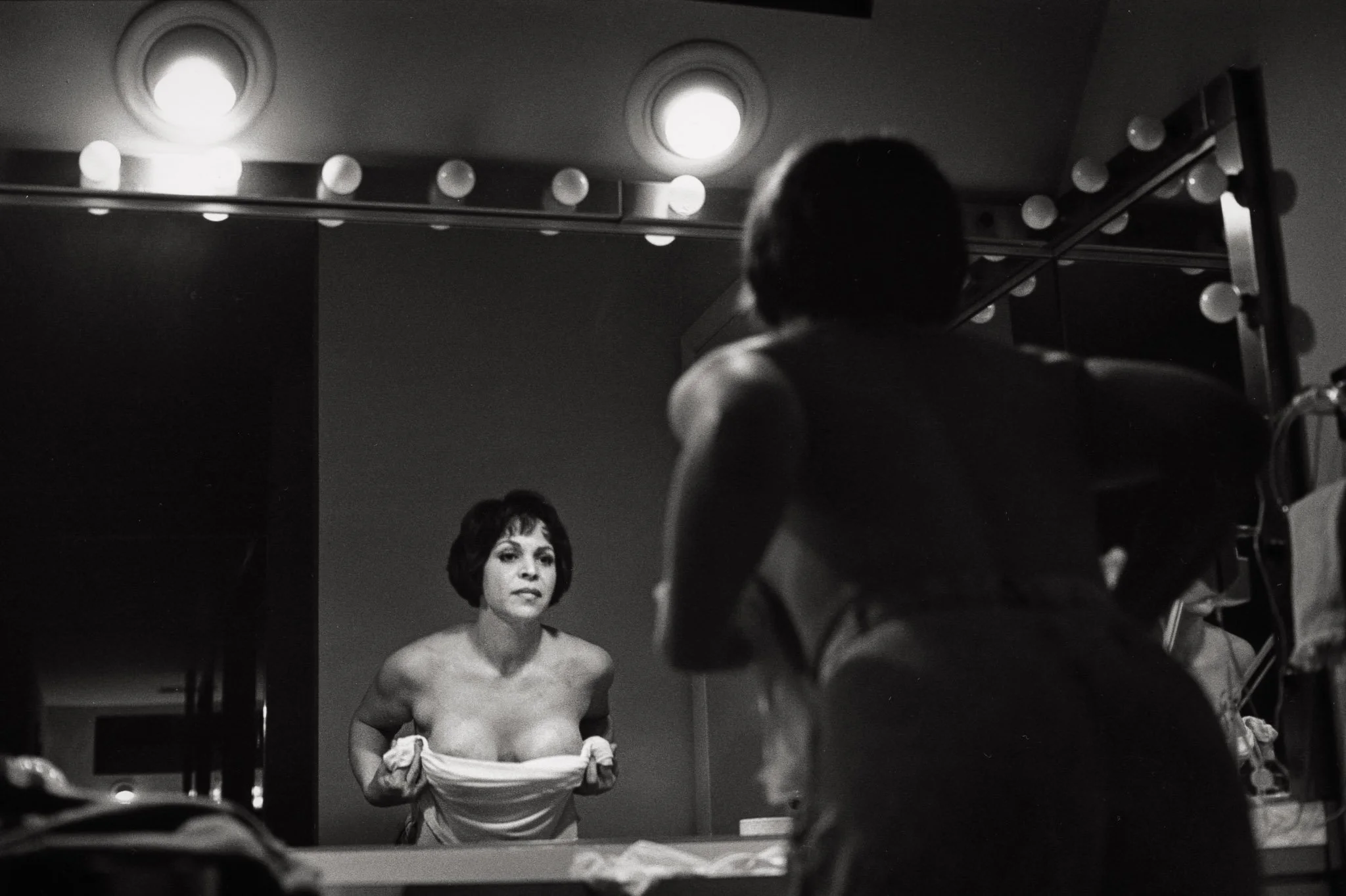
A dark frame with a small spot of light on a woman's chest, only a few inches across, as a surgeon holds a small ruler and a marker, creating guidelines for where he will cut as he fashions a nipple out of folds of skin.
A woman leans forward in front of her bathroom mirror, a towel drawn across her chest, as she assesses her cleavage and nipples during her process of breast reconstruction following a mastectomy.
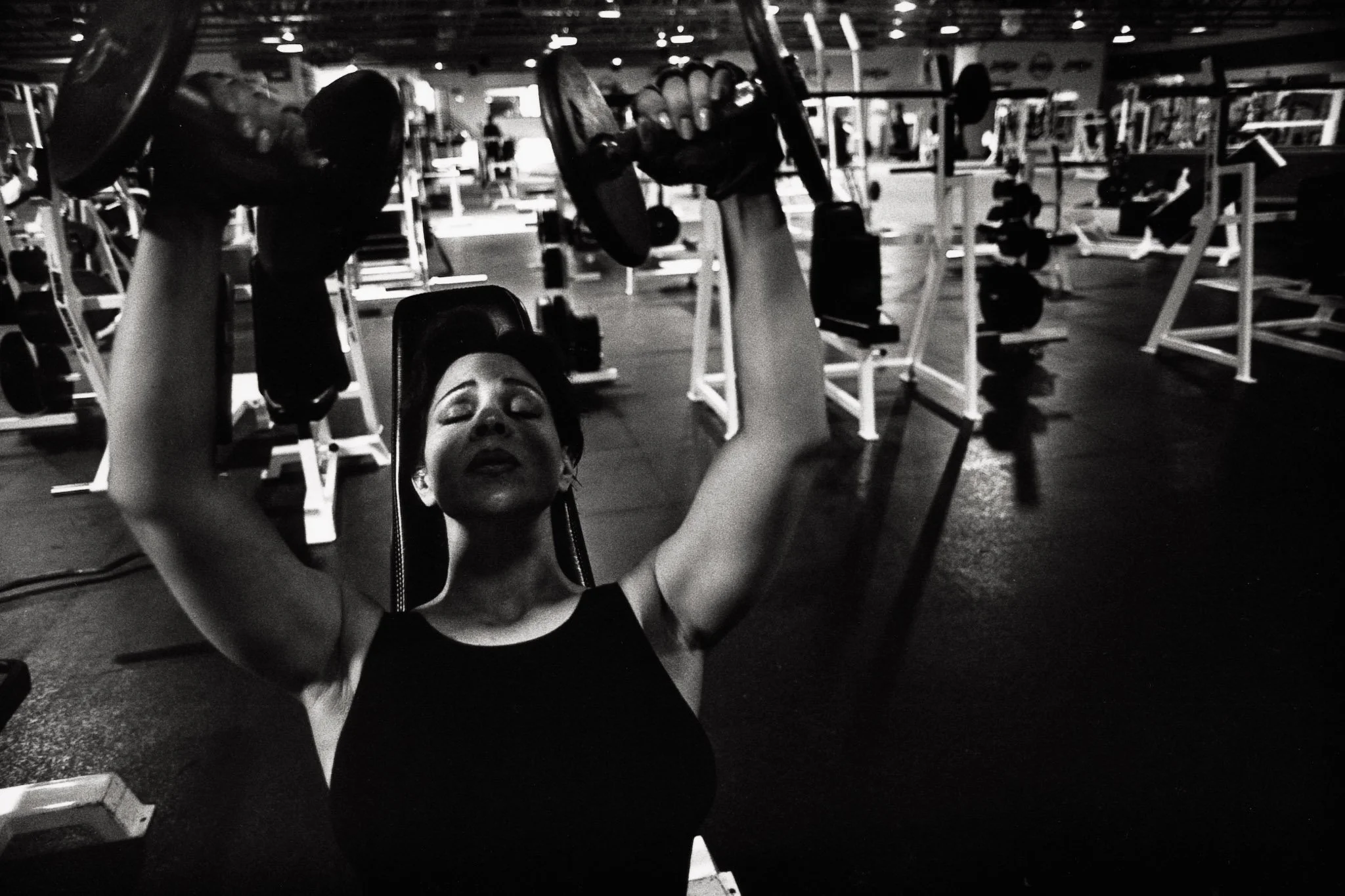
A dark frame taken in a gym, a woman on a bench lifts dumbbells over her head, eyes closed in concentration. She works to build her immune system to ward off a recurrence of breast cancer.

Diane trains daily to strengthen her immune system and combat the stress she believes was the cancer's catalyst. Her heightened susceptibility has led her to zealously uncover and avoid environmental carcinogens, but she is frustrated by the tonxins' pervasiveness. To avoid dying, must she stop living?

A woman lies back on a table in a doctor's office, looking up with concern, her face framed by three hands. Her own, her doctor's, and her other hand feeling the spot near her bare breast where her cancer has returned to her lymph nodes.

Fighting depression and a persistent feeling that something insider her is wrong, Diane meets with her doctor. He finds a tumor in her right pectoral muscle. Less than a year and a half after finishing her treatment, as her reconstruction neared completion, the cancer has returned.
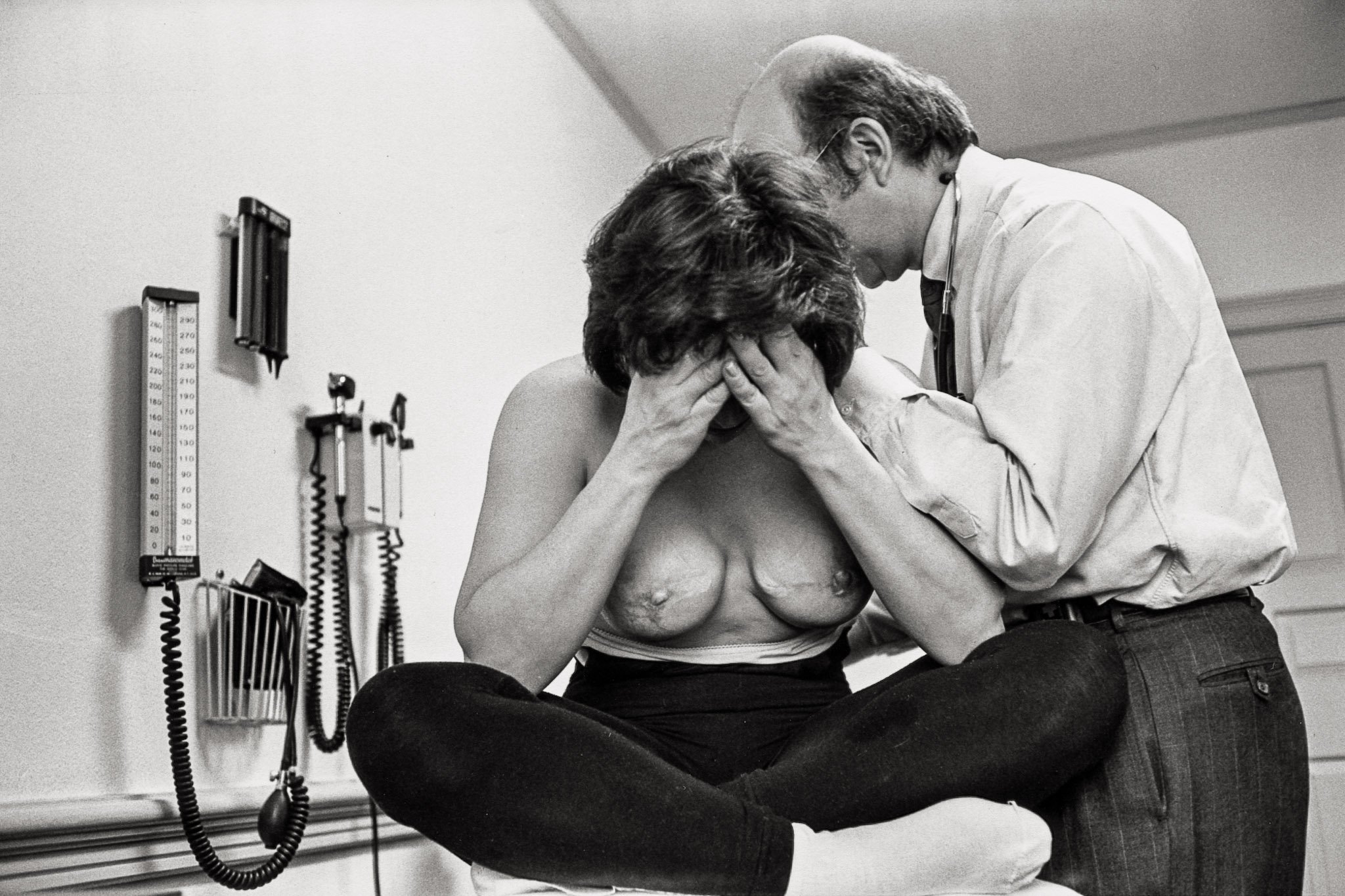
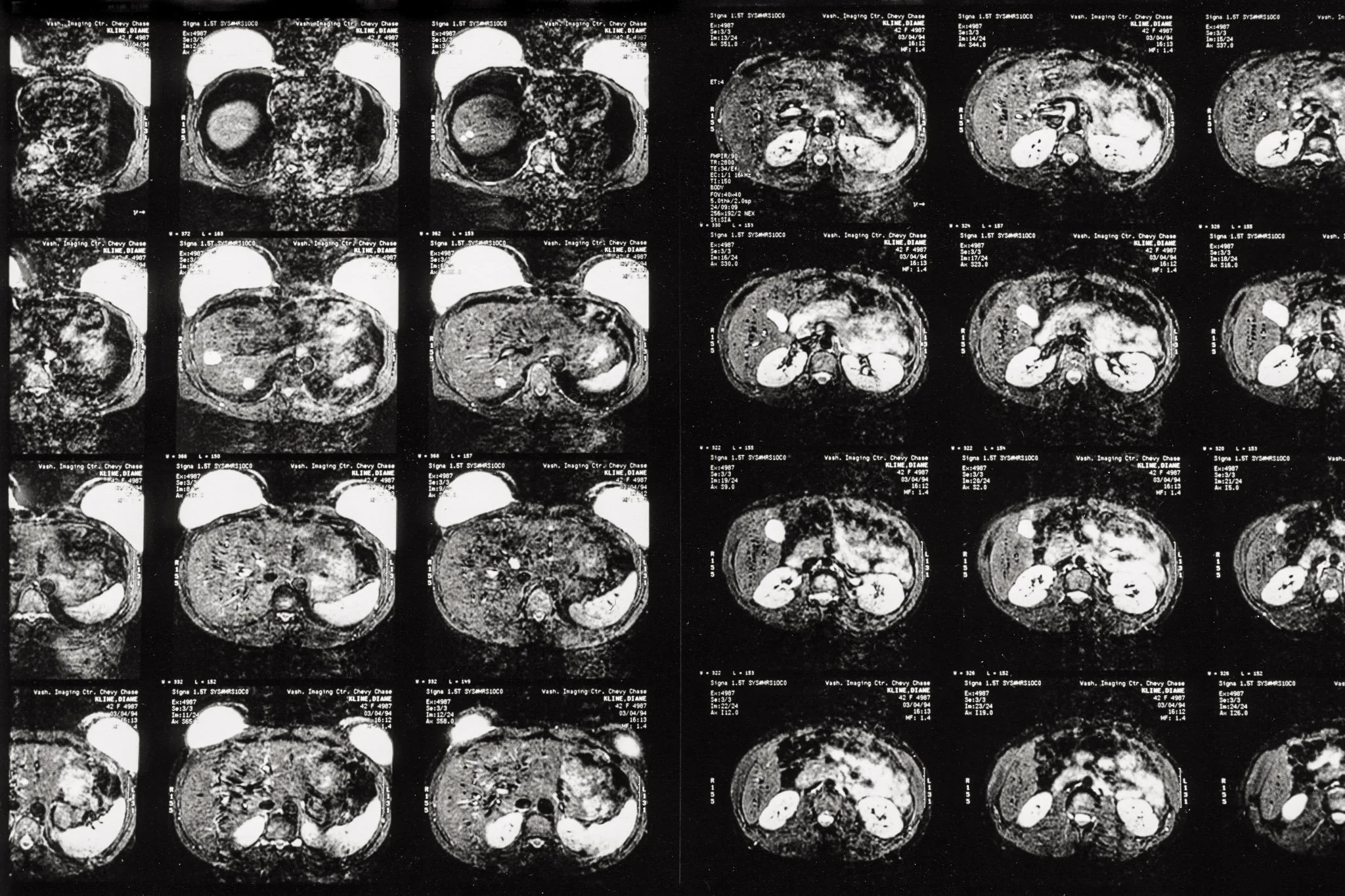
A woman sits cross legged on the examination table in an oncologist's office, her head buried in her hands, her bare chest showing signs of a mastectomy, having just learned her cancer has returned.
Images from an MRI scan following a recurrence of breast cancer. They are slices of the abdomen near the breast, the breasts mostly opaque as they are saline implants.
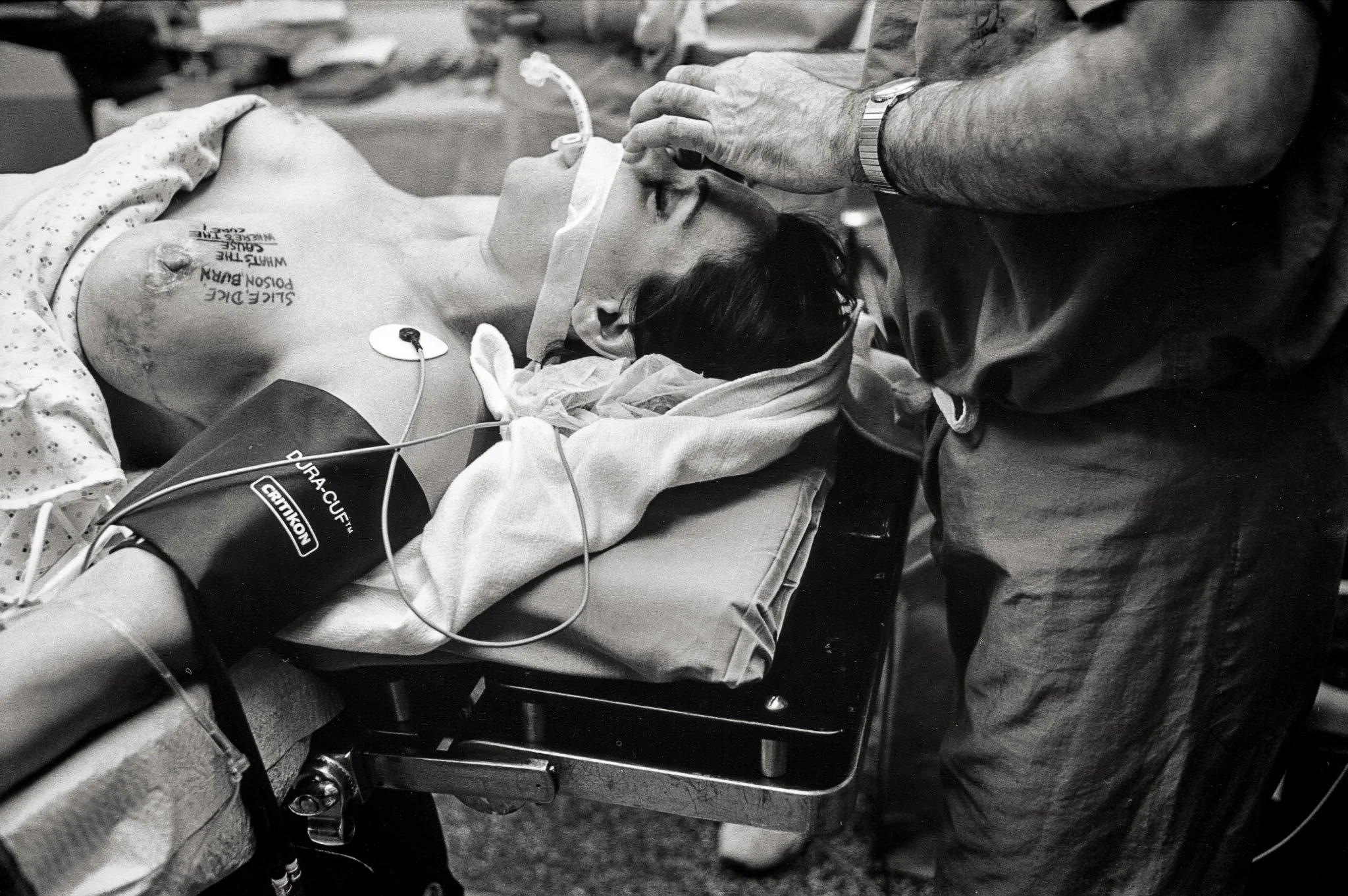
A woman sits unconscious in an operating room, a breathing tube in her mouth, EKG pads on her body. On her partially reconstructed breast she wrote "SLICE DICE POISON BURN. WHAT'S THE CAUSE, WHERE'S THE CURE?"
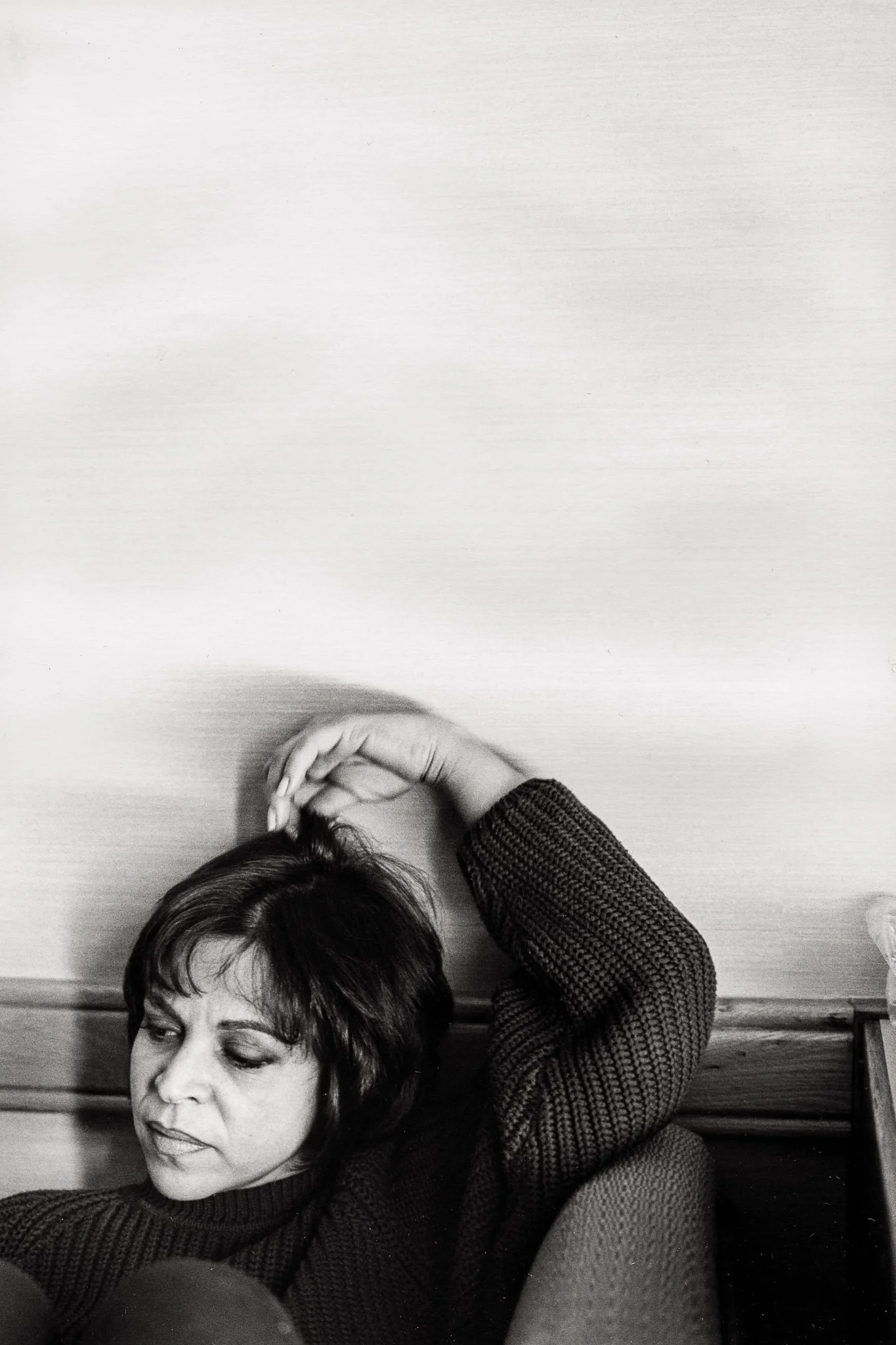
A woman sits on the lower corner of the frame, tightly cropped, knees visible, her arm upraised and bent over her head, with a somewhat defeated expression. Frame is mostly negative space, she is small and at the bottom.